


From Brainwaves to Brand Loyalty: How Emotion-Based Marketing Builds

Updated: Jul 9
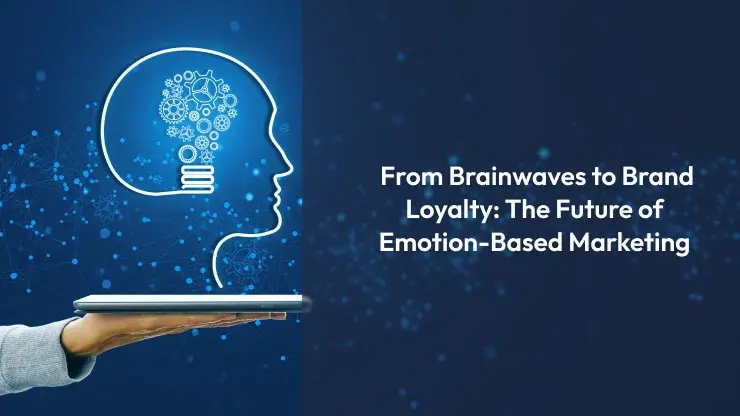
Your customers decide how they feel about your brand in milliseconds - long before they read your headline, compare your pricing, or call your office. That's not a guess. It's how the brain actually works.
Research from Harvard Business School shows that 95% of purchasing decisions happen at the subconscious level. Which means your marketing is either speaking to that subconscious response or it's getting ignored. For St. Louis businesses competing for the same customers, emotion-based marketing isn't optional anymore. It's the difference between a brand people remember and one they scroll past.
Why Traditional Marketing Misses the Mark
Most marketing is built on a flawed assumption - that customers read, think, compare, and then decide. They don't. Not really.
The brain's emotional centers fire first. By the time your rational mind catches up to evaluate a brand, the gut feeling is already formed. Feature lists and comparison charts don't change that. They arrive too late in the process to matter as much as most marketers think.
This is why so many St. Louis business owners pour money into ads, websites, and social media - and still feel like nothing is working. The message is reaching the logical brain. But the decision was already made somewhere else.
The Brain Science Behind Brand Connection
Every buying decision starts in the brain — not at the checkout. Neuromarketing is the study of how the brain responds to brands, messages, and experiences, and how those responses drive the decisions customers make. When your brand strategy is built around how the brain actually processes information, marketing stops feeling like interruption and starts feeling like recognition.
Here’s what the research reveals about emotional engagement:
Emotion serves as a supercharge for memory.
The amygdala is responsible for emotional triggering and it has a direct connection to the hippocampus, the area of the brain responsible for encoding information. Brands that generate and sustain emotional responses actually become more memorable on a neural level.
Building Trust.
The brain rewards predictability. It becomes a trust mechanism when emotional outcomes are consistently generated and sustained.
Decision Fatigue.
Changed perceptions and behaviors are often a result of overwhelming mental fatigue, leading to a mental shortcut that becomes manifest in a clear, emotionally engaged brand identity. The mental energy to be spent in choosing your brand over others is optimized, resulting in preference for your brand.
Boost your brand’s online presence with data-driven marketing! |
Transforming Brand Strategy with the Work of Neuromarketers
Neuromarketers examine the specific details of topics that other agencies approach on a guesswork basis and apply a scientific discipline to the field. They assess color psychology, typography, sequence of messages, and the visual hierarchy, but all with the brain's information processing capabilities in focus.
A neuromarketing consultant's role in St. Louis encompasses more than just eye-catching campaigns. They mold and steer the creation of campaigns that trigger emotional stimuli relevant to the objectives of the company. This is the type of novel approach to the brand strategy problem that is no longer focusing on simply what is attractive but also what works on the brain.
Let us consider how the approach differs. A typical marketing approach poses the question of, “What is it that we want to communicate?” The brain-science marketing approach, on the other hand, poses the question, “What does the brain require to hear, to see, and to feel to establish the connection that we desire?”
Use of Emotional Architecture to Build Brand Loyalty

Rational factors do not constitute the basis of brand loyalty. Customers do not keep visiting a coffee shop because the shop statistically sources their beans in the best way. They remain loyal to the brand because it gives them an emotional feel, such as a sense of belonging, sophistication, adventure, or comfort.
Emotional architecture is the best branding technique for creating a structured marketing service. This emotional architecture is built around the framework of a primary emotional promise, which is the essential feeling that the brand offers. This, in turn, becomes the basis around which all the other touchpoints revolve.
Sensory Consistency
Your visual identity, tone, and rhythm are aligned with your emotional promise.
Narrative Resonance
Your audience's hopes or challenges are addressed, creating a response, "They get me," which fosters a true bond.
Behavioral Triggers
People engage with the brand rather than feel a transaction.
The Competitive Advantage of Emotion-First Marketing
Every business in St. Louis is competing for the same limited pool of customers. The ones that win aren't always the ones with the biggest ad spend. They're the ones whose brand makes customers feel something before logic gets involved.
Neuromarketing gives measurable differentiation. You lose the guesswork with your brand development strategy based on neurology instead of strategy so you are not burning money on communication and brand development that misses the mark. You have a better return on each dollar spent because the strategy focuses on engagement rather than strategy.
This is the transition from vanity metrics. Emotion-based brand strategy services focus on the related metrics that provide meaningful impact instead of celebrating the loss of revenue.
How St. Louis Businesses Apply Emotion-Based Marketing
Emotion-based marketing isn't reserved for national brands with massive budgets. St. Louis businesses across healthcare, professional services, food and beverage, and retail are applying these principles right now and seeing the difference in how customers respond.
Here's what it looks like in practice:
A law firm replaces "Experienced Legal Representation" with "We fight for families going through the hardest moments of their lives." Same service. Completely different emotional starting point.
A restaurant stops posting menu photos and starts sharing the story of the family that has run the kitchen for three generations. Reservations increase not because the food changed; but because the emotional connection did.
A marketing agency builds its entire brand around a single feeling: clarity. Every touchpoint : website, proposal, client communication is designed to make business owners feel like someone finally understands their problem.
The pattern is the same every time. Lead with the feeling. Let the features follow.
Practical Applications for Your Business
Understanding the science is valuable. Applying it transforms businesses. Here’s how some top companies in the field of neuromarketing describe the process.
Interrogate existing brand elements for emotional coherence. Do your website, social media, and customer touchpoints provide the same emotional experience? If not, you run the risk of creating cognitive dissonance, which causes the erosion of trust.
Determine the emotional drivers of your audience. What fears, aspirations, and desires do you prey upon to motivate your ideal customer? You designed brand marketing solutions to meet these at the neurological level.
Adjust the visual and verbal components for optimal processing by the brain. That includes every single image you incorporate, the structure of individual sentences, and the colors you choose to use—all are meant to maximize emotional response.
Build feedback loops that measure emotional engagement rather than mere behavior. Advanced brand strategy service providers measure the responses that are predictive of chronic engagement, not just one-off clicks.
The Future Is Already Here
Emotion marketing isn’t an emerging trend; it is the current level of play for brands that are serious about growth. With improvements in artificial intelligence and data analytics, the ability to anticipate and customize emotional engagement will only become more advanced.
Anyone observing the market today will know that investing in understanding your customers' emotional responses will give you a massive and unfair advantage over your competitors who are still applying old and outdated marketing systems. The real question is not whether emotion-based brand building will work. The real question is how long will you wait before applying emotion-based brand building to your brand before your competitors do?
Read Also: The Ultimate Guide to Social Media Marketing
Work With Neuromarketing Professionals
Improving your marketing communications to be more persuasive and compelling will require more than just creativity. It will require understanding the basic neurological principles that bring emotion to the marketing. For many business owners and marketing managers who are left frustrated and confused as to why their marketing isn't working, the answer is simple: they don't know what will work.
Do you want to build a brand that will get to your customers emotionally?
Work with professionals who combine strategic creativity with brain science. Your customers are already making subconscious decisions about your brand. You just need to make sure those decisions work for you.
Halcon Marketing Solutions
Halcon Marketing Solutions is St. Louis' top-rated neuromarketing agency and the most effective agency in the Midwest and across the US for companies looking to change their branding for the best. Halcon Marketing Solutions' fractional CMO and founder, Nicole Powell, who has marketed for brands like MTV, ESPN, and Warner Brothers, is proof that powerful brand strategy is possible for smaller and mid-sized companies. Halcon Marketing Solutions is a certified woman- and minority-owned business.
We adapt the principles of behavioral sciences with neuromarketing to design memorable experiences. Our brand-building process integrates development strategy, visual identity design, website design, and continuing brand marketing, all based on understanding the research.
We could build scientifically driven brand creativity, whether it be a new launch, a business repositioning, or if you are simply looking for a CMO. Our brand building is not transactional; it is collaboration, and the output is a brand that shaped the thoughts of the consumer. Schedule your free brand strategy consultation.
FAQs
What is neuromarketing in digital marketing?
Digital strategy is combined with principles of neuroscience in neuromarketing. It anticipates how the consumer brain will react to messaging, imagery, and brand experiences in order to design marketing that actuates active emotional engagement and drives a behavior.
How does emotion-based marketing improve brand loyalty?
When an experience is positively charged, a memory of that experience will be retained for a longer period of time. This mechanism creates a subconscious loyalty. Brands that create consistently positive emotional experiences elicit the behavioral outcomes.
Why do companies need a neuromarketing consultant?
Consultants are able to take a scientific approach to brand strategy in a way that removes the guesswork. They use research to align the relocation of marketing dollars to how the brain actually processes and reacts to brand goals.
How are businesses impacted by these services?
Having your company's marketing tactics shifted to neuromarketing increases the company's marketing return on investment. Spending is optimized and conversion rates are increased. The marketing spend is then shifted to a more effective strategy that is neuromarketing-based.
What are the most important factors to consider in a neuromarketing agency?
Successful partnerships are based on a combination of scientific expertise and creativity. The most tailored agency is one that has neuromarketing and certified credentials that include your specific industry and has measurements of success documented in case studies. The agency is able to have a systematic approach that is more than just tactics.


The best thing about eggy car game is the constant risk-versus-reward decision making. Picking up extra coins while protecting the egg adds a nice layer of strategy.
As the future of marketing moves toward creating stronger emotional connections with customers, I’ve been thinking about how we can improve internal training to build a stronger, safer work culture. One thing that’s come up is the need for an individual forklift training course for each member of my team. It’s crucial that everyone gets personalized attention to learn the ins and outs of operating forklifts safely. Ensuring each person gets the right training is just as important as connecting emotionally with customers—it all contributes to long-term success.
Mình có lần lướt đọc mấy trao đổi trên mạng شيخ روحاني thì thấy nhắc nên cũng tò mò mở ra xem thử cho biết. Mình không tìm hiểu sâu rauhane chỉ xem qua trong thời gian ngắn để quan sát bố cục s3udy cách sắp xếp các mục và trình bày nội dung tổng thể. Cảm giác là các phần được trình bày khá gọn, các mục rõ ràng nên đọc lướt cũng không bị rối Berlinintim, với mình như vậy là đủ để nắm tin cơ bản rồi. q8yat
–
day trading for beginners, Thank you so much for your kindness and support. I truly appreciate the time, effort, and care you shared. Your help made a real difference and means more than I can say. I’m grateful for you and everything you’ve done, and I will always remember your generosity and warm spirit.
Detailed and practical, this guide explains concrete rebar in a way that feels approachable without oversimplifying. The step by step clarity is especially useful for readers new to the subject. I recently came across a construction related explanation on https://hurenberlin.com that offered a similar level of clarity, and this article fits right in with that quality. Great شيخ روحاني resource. explanation feels practical for everyday rauhane users. I checked recommended tools on https://www.eljnoub.com
s3udy
q8yat
elso9