


AI Can Make a Graphic. It Can't Make Someone Care About Your Business.

Updated: 1 day ago
AI can produce a homepage, an ad, a logo direction, a blog outline, a sales email, and a dozen taglines before breakfast. That is useful, but just because AI created it, it doesn't mean it should be used.
A draft is not a decision. AI can summarize, compare, or suggest; but the decision still requires a human to weigh the business goal against the customer reality.
HALCON uses AI, and to be transparent with our colleagues and clients, I wrote this blog post to explain the ways in which we use this powerful tool. Many serious marketing and design teams do. Being open about that matters because clients and vendor partners deserve to know how the work gets made.
But “we use AI” and “AI replaces marketers and designers” are two very different claims.
In this short video, I break down why an algorithm can produce a website in four minutes but can't bring ten years of client problems, bad launches, and hard-won judgment to the table.
It's less than two minutes. Watch it below, then keep reading and I'll show you a single prompt and the difference between an AI-generated graphic and a graphic designed intentionally to be understood and remembered by the human brain.
Here's the truth. AI makes some parts of the work easier and faster. What it does not replace is judgment and real-world experience that comes from years of real projects, real customers, real constraints, real budgets, and real consequences. An algorithm did not have the difficult conversation that changed how the next project was handled.
AI has patterns. People have moments - moments where they were reprimanded by a client or boss, because of a mistake or lackluster campaign. These moments create instincts and foresight, helping them recognize potential bottlenecks and risks long before they become problems. People bring the judgment that comes from having lived through the consequences, vowing to themselves "to never do that again."
Here is the cleanest way to see the gap.
A small business owner types these event details into an AI tool (the below is totally random, btw...)
Create an event graphic for the below to post on social.
Event name: Groundwork — A Coffee & Strategy Morning
Tagline: Big moves start small.
Type: Half-day workshop + networking breakfast for founders and solo marketers
Date: Saturday, November 8, 2028
Time: Doors 8:30 AM · Program 9:00 AM–12:30 PM · Coffee and pastries served throughout
Venue: The Boathouse,
Host: Presented by Made This Up Creative
Speakers: TBD (brand strategist), Rafael, and a closing Q&A panel moderated by Dolly
What's included: Three 40-minute sessions — "First Session," "Second Session," and "When to Stop DIY-ing" — a printed workbook, one 15-minute 1:1 strategy slot per attendee, and a takeaway gift
Capacity: 45 seats
Price: $65 early bird through October 24, $90 after · Two scholarship seats available on request
Registration:registerhere.co
Contact: hello@regusterhere.co
Details worth noting: Street parking is free on weekends; nearest BART is West Oakland, 8-minute walk. Venue is wheelchair accessible. Vegan and gluten-free options available if noted at checkout. Business casual. Bring a laptop for the workbook exercises.
Social: #GroundworkOakland ·
Brand colors
Ink Navy — #17253D (primary / backgrounds)
Bone — #F2EDE4 (primary text on dark, light backgrounds)
Marigold — #E8A33D (accent — dates, CTAs, underlines only)
Clay — #A85B45 (secondary accent, sparingly)
Sage Gray — #8E9A8F (dividers, captions, fine print)
True Black — #0B0B0B (hairlines and shadows only)
Type: Display — DM Serif Display & Helvetica Now. Two faces maximum.
I typed that prompt and this is what AI spit out.

Sure, it has all the information present and nicely laid out. But should it be posted as a graphic on social media? The HALCON team would have to say, "no." To my dismay, I see graphics like these being posted on social media all the time with captions containing the same information or no information at all.
So, how does HALCON design?
Well, we believe graphics should be designed using the Attention → Memory → Choice framework. It must immediately capture attention with one dominant focal point and strong visual hierarchy, communicate one clear message that can be understood within seconds, and create a memorable emotional connection that drives action. We avoid clutter, competing visuals, and overly clever copy, instead prioritizing clear headlines, human-centered imagery, and a highly visible call to action. Sure, the graphic AI created looks good, but in this digital world with many brands competing for attention, we need to create graphics that are seen, understood, remembered, and acted upon.
We design for the brain and how it likes to receive information.
Color is not just a preference. It affects contrast, mood, and accessibility. Typography is not just style. It affects readability and perceived price. Layout is not just arrangement. It guides attention. Photography is not just decoration. It signals who the service is for and what kind of outcome people can expect.
I sent our team the same information, and the graphic below is what they sent me for posting. Do you notice the difference? We prompt people to go to the caption for more information, so that the graphic is clear and crisp.
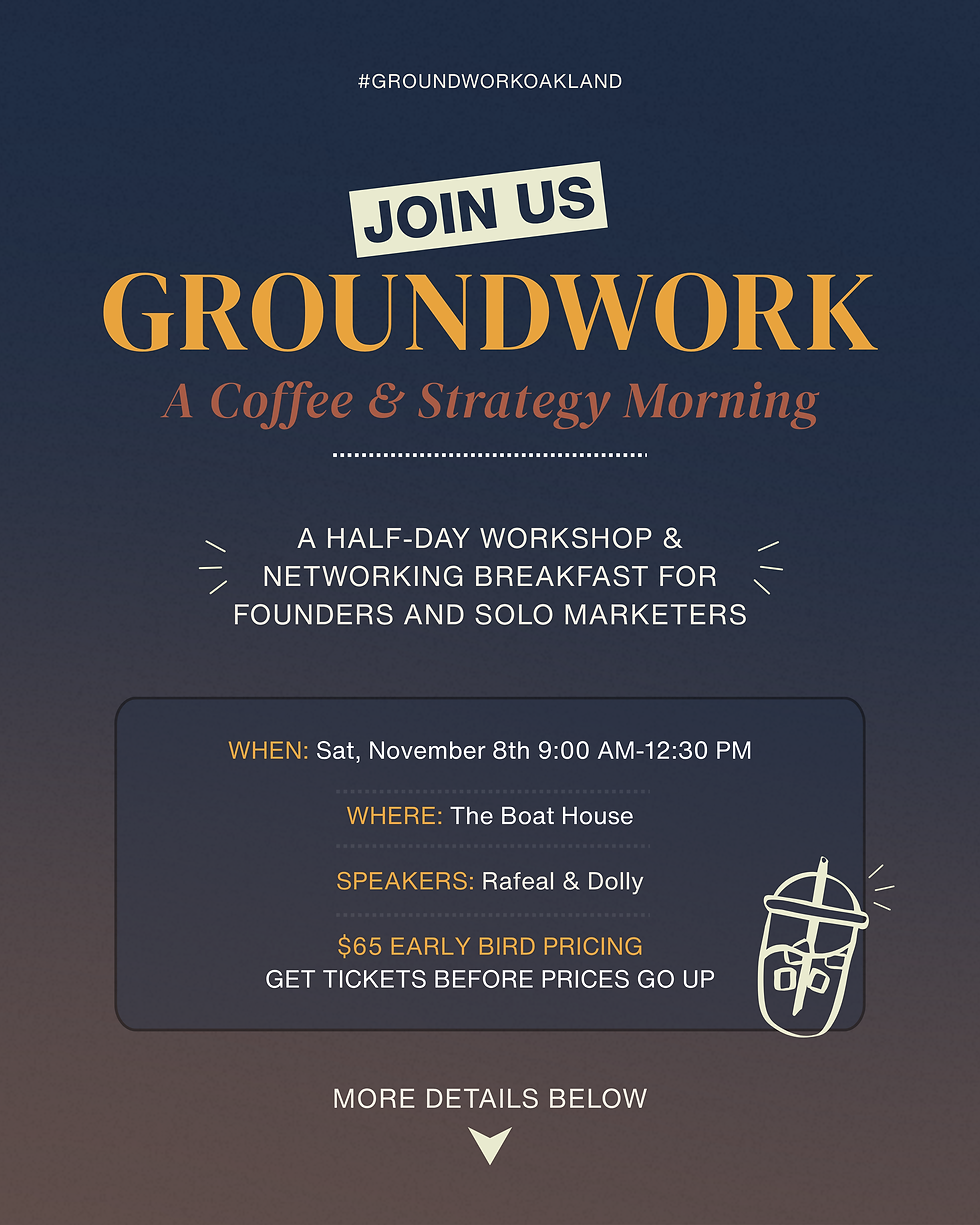
The prompt is usually not the real brief
AI output depends heavily on the prompt. Better prompts produce better drafts. That is true, but it also proves the point.
Most business owners do not start with a perfect brief. They start with a symptom or an issue that needs fixing. Oftentimes, marketers and strategists dig deeper, beyond the superficial symptoms, to understand the root cause.
For example, “make the site look more modern” might become:
Clarify the offer above the fold
Separate services for different customer types
Add proof near decision points
Rewrite the call-to-action around the next step
Remove language that sounds like every competitor
That is the diagnosis. AI may be able to help once the diagnosis is clear, but if the wrong problem gets fed into the tool, the output may simply make the wrong solution look more convincing.
AI raises the value of clearer human thinking
AI makes average output easier to produce. That means the market will see more acceptable designs, more acceptable copy, and more acceptable content.
Acceptable is not the same as effective.
When everyone can generate something polished, the advantage shifts to sharper strategy, better taste, clearer positioning, stronger proof, and more careful decisions. The value moves toward people who can look at five good options and say, “This one fits the business, this one will confuse buyers, and this one looks impressive but will not convert.”
That kind of decision comes from experience.
It comes from knowing when a client says “premium” but means “trustworthy.” It comes from noticing that the founder story matters more than the service grid. It comes from realizing that a booking form above the fold will help one business and cheapen another. It comes from seeing patterns across projects and remembering what happened after launch.
AI can assist that process, but it cannot own it.
If your website, brand, or marketing materials need more than another draft, talk with HALCON about making the right decision for your business.
FAQ
Can small businesses use AI for marketing and design?
Yes. AI can help with brainstorming, outlines, first drafts, research summaries, and content variations. It works best when a person reviews the output for accuracy, fit, tone, and business goals.
Will AI replace marketers and designers?
AI will replace some low-context production tasks. It will not replace the need for strategy, taste, accountability, customer understanding, and decision-making. Strong marketers and designers will use AI as a tool, not treat it as the final judge.
What is the biggest risk of using AI-generated content?
The biggest risk is publishing something that sounds polished but does not fit the business. It may be generic, inaccurate, legally risky, off-brand, or aimed at the wrong customer.
How should a business review an AI draft?
Check the draft against the goal, audience, offer, proof, brand voice, and next step. Then test whether a real customer would understand what to do and why it matters.
When should a business bring in a professional?
Bring in a professional when the decision has real business weight. That includes a new website, brand refresh, campaign launch, service positioning, paid traffic, or any project where the wrong message could cost leads or trust.
AI can draft quickly. It can explore widely. It can make the empty page less intimidating. But it cannot decide what matters most for a specific business at a specific moment. That is still human work, and it is not going away.


Comments